Tearing Sunshine

Mum moves like rinse water—
warm, grey,
going where she’s poured.
Hands red-raw
from bleach and bones
she can’t scrub clean.
She hums when she’s bone-tired,
not for tune,
just to keep from cracking.

Dad says work is hard—
but only ever sits,
rail grease on his boots,
beer in hand,
trophy beside him:
Highest Goal Scorer,
1983.

He holds it like a wound
that never scabbed.
Says he could’ve been something
if Mum hadn’t—
if I hadn’t—

Doesn’t say the rest.
He just drinks.

Then one day—
a yellow dress.
Hand-me-down.
Sunlight sewn into thread.

Mum steps into the yard
like she’s forgotten
someone might be watching.
Strips to the greying cotton of her
and pulls the yellow on—
slow, soft,
like trying on a life
that didn’t happen.

She twirls once.
Eyes closed.
A ghost of a girl
smiling through the cracks.

Then boots.
The back door slams.
Slut
In a voice like wire.

The dress tears in two directions—
fabric, then her.
She clutches the scraps
to the parts of her
he once loved.

And shrinks.

That night—
beer cans breathing,
trophy glinting
under weak kitchen light.
He slumps.
Mouth open.
Gone.

I take the trophy,
glass warm from his hand.
Step barefoot through bindii
to the path.
Raise it.

It catches moonlight
for a second.
Then gone.

The sound is clean.

I lay the shattered pieces by his chair,
like they fell
when he groped
for the past
and missed.

Ryan Stone

First Smoke

I lit it behind the shed
with a match I struck on the tin—
my thumb raw from trying.

The cigarette trembled
between fingers that still knew
Lego and scraped knees.

I didn’t cough.
Didn’t blink.
Just held the burn in
like I was keeping a secret
only smoke could understand.

The dog watched,
head tilted,
like he knew I’d crossed
into something I couldn’t uncross.

By the time Mum called for tea,
my breath was fire and hush,
and I’d decided
not to be a boy anymore.

Ryan Stone

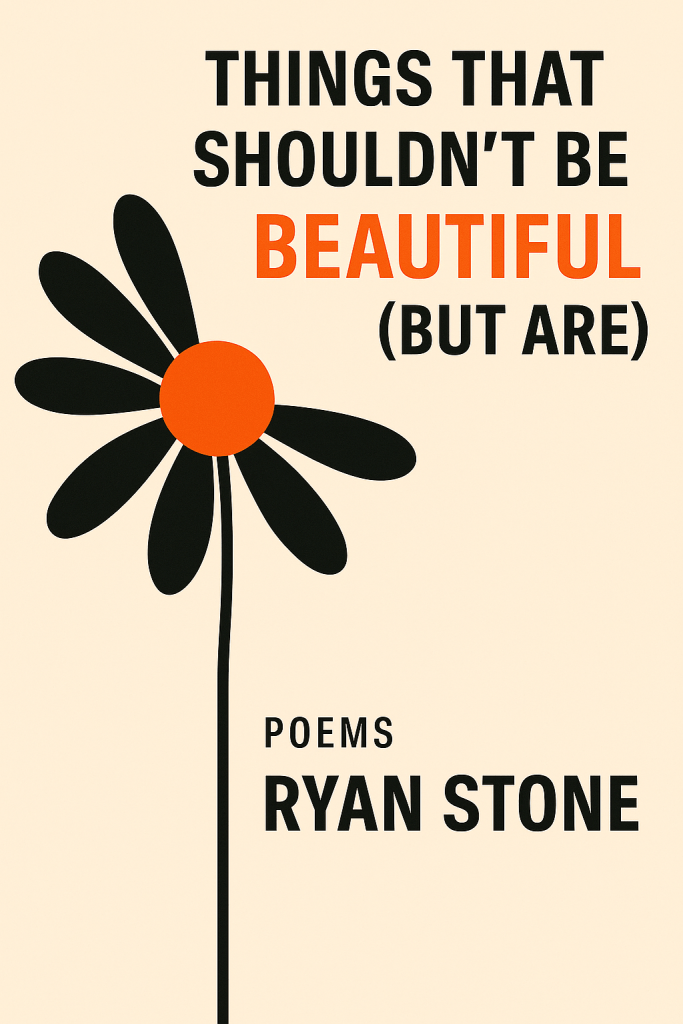
New chapbook on Amazon

I’m excited to announce that my new chapbook is published and available for kindle on Amazon. Paperback to be released shortly.

Book overview 

Things That Shouldn’t Be Beautiful (But Are)
Poems by Ryan Stone

A jellyfish that never dies.
A swan that stays after love is gone.
A beetle with mirrors for eyes.
This quietly astonishing collection brings together strange truths from science, nature, and myth—each transformed into a lyrical poem that finds beauty in the unlikely.

Spare, mythic, and emotionally resonant, these thirty poems explore what it means to survive, to remember, to reach for connection—even when no one is listening.

For readers of Mary Oliver, Ross Gay, or Ada Limón, Things That Shouldn’t Be Beautiful (But Are) is a poetic celebration of wonder, smallness, and the strange.

The Stack

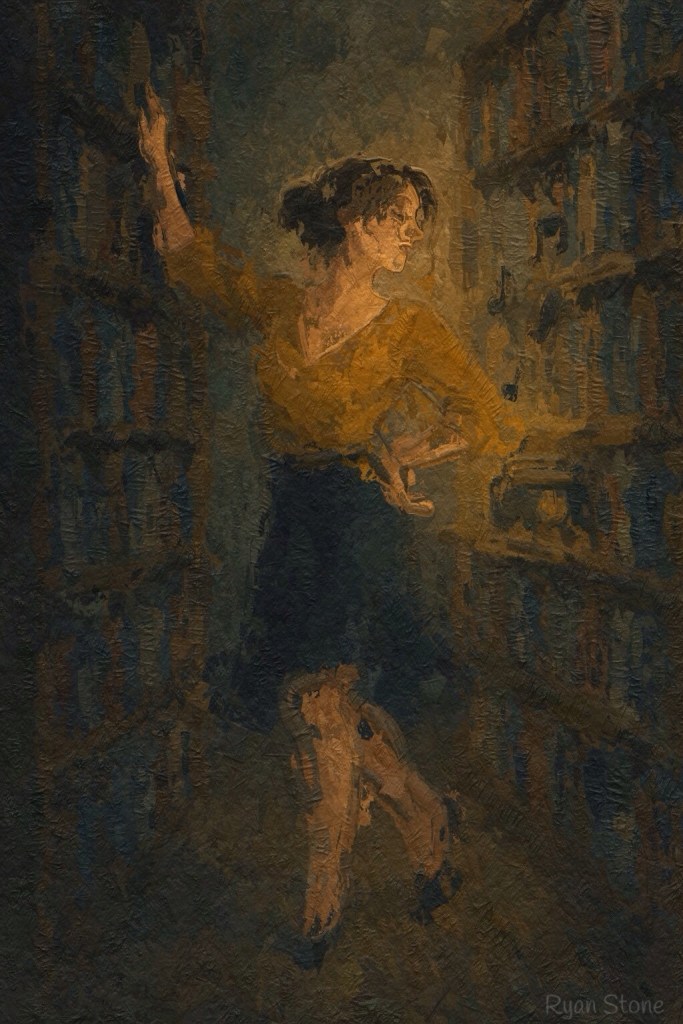
Miss Carr was the strict one—
hair wired tight,
skirts to the shin,
a voice of rules
and overdue fines.

The library breathed her name.
Quiet, please.
Return on time.
Hands to yourself.

I once saw her shush the deputy principal,
and he apologised.

We said she slept in the archives,
alphabetised her dreams,
quietened ghosts for sport.

She didn’t see me—
tucked in Fiction,
in the hush between Neruda
and Nietzsche.

As she reached for a book,
her blouse rode up—
bare skin,
lace black as ink,
the kind of secret
you never give back.

Then jazz—
low and slow—
slipped out like sin,
swirling with smoke
and memory.

She swayed,
hips in slow orbit—
a moon
shedding gravity.

I held my breath.
Watched her eyes close,
her mouth curve—
not a smile,
something primal
and wild.

She looked like someone
who once belonged
and wasn’t sure
if she missed it.

She smoothed her blouse,
buttoned calm back into place,
and turned off the music
without looking my way.

But as she passed,
she paused—

“Alphabetical,”
whispered
soft as dusk.

Ryan Stone

Out Here, the Light Fails Slower

Above us, the wind leans into nothing.
Below, fenceposts mark the long retreat
of boundary lines no one remembers drawing.

Somewhere beyond this paddock,
a child flicks a torch on and off—
signalling to no one,
or to the stars.

High overhead,
a satellite drifts,
blind but listening.

Closer in,
a man stacks firewood
by feel alone,
his breath silver
in the cold.

He doesn’t look up.
Not at the planets
looping like tired horses.
Not at the slow-failing light
that’s taken years to reach us.

He just finishes the job,
wipes his hands on his jeans,
and goes inside—
leaving the porch lamp on,
a small promise against the dark.

Ryan Stone

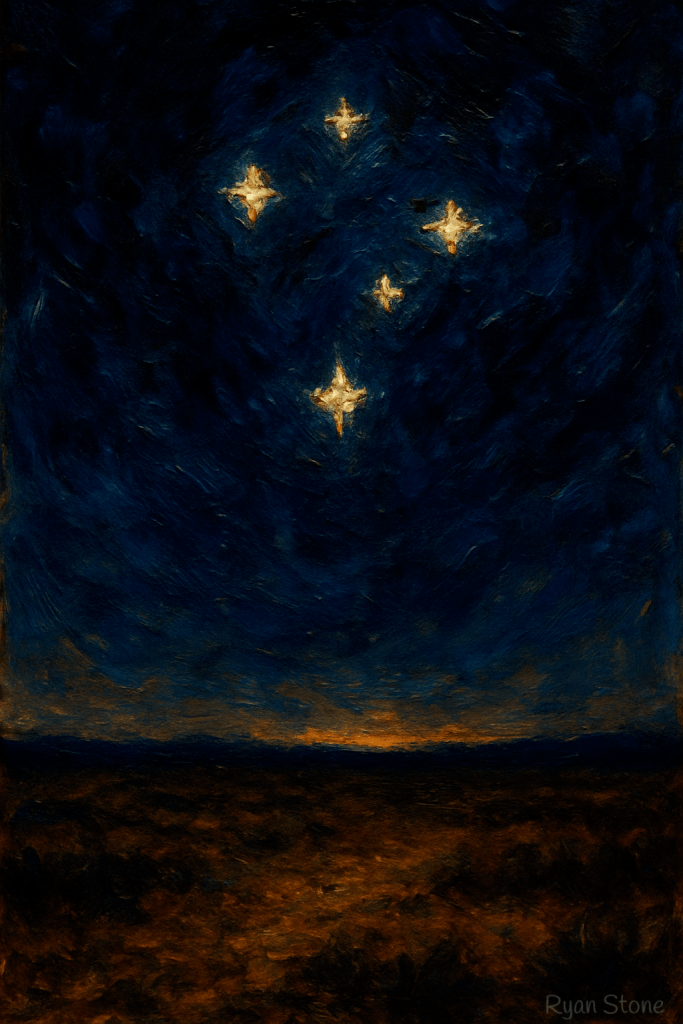
Southern Cross

Some nights,
when the wind shifts
and the silence settles deep,
I step out barefoot
onto the cold veranda.

Above the gum trees—
the Southern Cross,
low and steady,
like it’s waiting for me
to notice.

It doesn’t blaze,
just holds its shape,
a quiet thing
pointing the way
I’ve always known
but needed to remember.

Not a map.
Not a promise.
Just a reminder
that home
isn’t something you reach—
it’s the walking,
the choosing,
the light you carry
when the dark won’t lift.

Ryan Stone

Red Wagon

I pulled my dog through summers,
tongue lolling in the heat,
ears twitching at bees
and things only he could hear.

The wagon rattled like laughter
over cracked footpaths,
and I—captain of that small red ship—
knew no world beyond
the corner store
and the shade beneath our tree.

It was enough.

Now I carry more—
keys, deadlines, debt,
the ache of wanting
what I used to have
before I learned to want.

My wagon rusts in a shed somewhere,
still red beneath the dust,
still waiting
for a child who doesn’t need more.

Ryan Stone

Almost Eden

You knew.
She knew.
It was thick in the air —
like rain that never falls.

Her hand on the doorframe.
Yours in your pocket,
clenched around nothing.

The storm had passed.
But the heat hadn’t broken.

She looked at you
like you were the answer
to a question she wasn’t supposed to ask.

And you looked at her
like a man
measuring the cost of heaven.

Her lips parted—
not an invitation,
just a fact.

You could’ve.
She would’ve.

Instead,
you stepped back.
Said something soft.

She nodded.
Closed the door
like it meant nothing.

And Eden
slipped away
behind her.

Ryan Stone

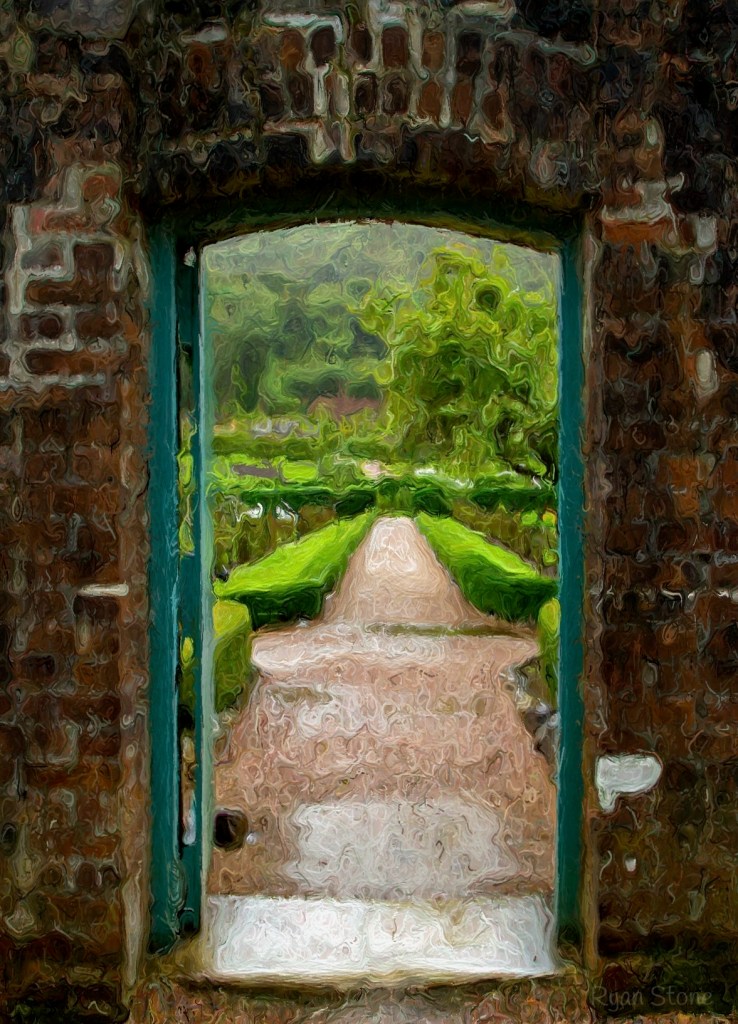
Door to Eden

Letter to My Sons

Boys,

When the fire comes—and it will—don’t run.
Stand your ground. Feel the heat. Know what’s worth burning.
Not everything you carry needs to be saved.

You’ll be told to move fast, talk loud, win more.
Don’t listen to that.
The quiet men are the ones you want near when things fall apart.

If your hands shake, that’s fine.
So did mine.
Do the work anyway.

Let yourself be broken by love at least once.
If you’re lucky, it’ll teach you where you end and someone else begins.
But leave them space. Don’t take what isn’t offered. Ever.

When loss comes, don’t try to beat it.
Feel it. Let it hollow you out clean.
Then build something inside the space it left.

The world will try to make you hard.
Let it make you solid instead.
Be unmovable when it counts.
But stay soft in the places that matter—your hands, your eyes, your heart.

People will try to name you.
Let your actions do it first.

Carry stories.
Especially ones that don’t paint you as the hero.
And remember: pain handled right becomes a kind of map.

Look out for each other.
That’s not advice, that’s bedrock,
even when you disagree, especially when you don’t speak.
You’ve always got each other’s back. That’s blood. That’s the deal.

And when no one notices you did the right thing—
good.
That means you’re growing into your name.

I’ll see you on the ridge.
Love,
Dad

Sons

Magpie Morning

Fifty soon.
Strange how that number
feels both heavier and lighter
than expected.

I wake before the house stirs.
Kettle on.
Dogs at my heel—
the old one careful on the tiles,
the young one waiting for the day
like it might break open just for her.

A magpie sings on the powerline,
low and fluted—
not calling,
not warning—
just there.
Like me.

The track behind is long,
marked with all the right things:
mud, fire,
boys with scraped knees and full bellies,
a wife who still sees me
when I go quiet.

The years haven’t made me wise,
but they’ve made me slower to speak,
and better at listening—
especially to my sons,
who keep handing me pieces of myself
I didn’t know I’d dropped.

There is more life to come.
I can feel it humming in the floorboards.
Not louder—
just steadier.

And if this is the halfway mark,
it’s a fine place to pause.
To stand with the sun
not at my back
or in my eyes,
but warming my chest.

The magpie sings again.
Not a beginning,
not an ending—
just the middle of a good song
I still get to hear.

Ryan Stone

Magpie Morning

Blog at WordPress.com.

Up ↑