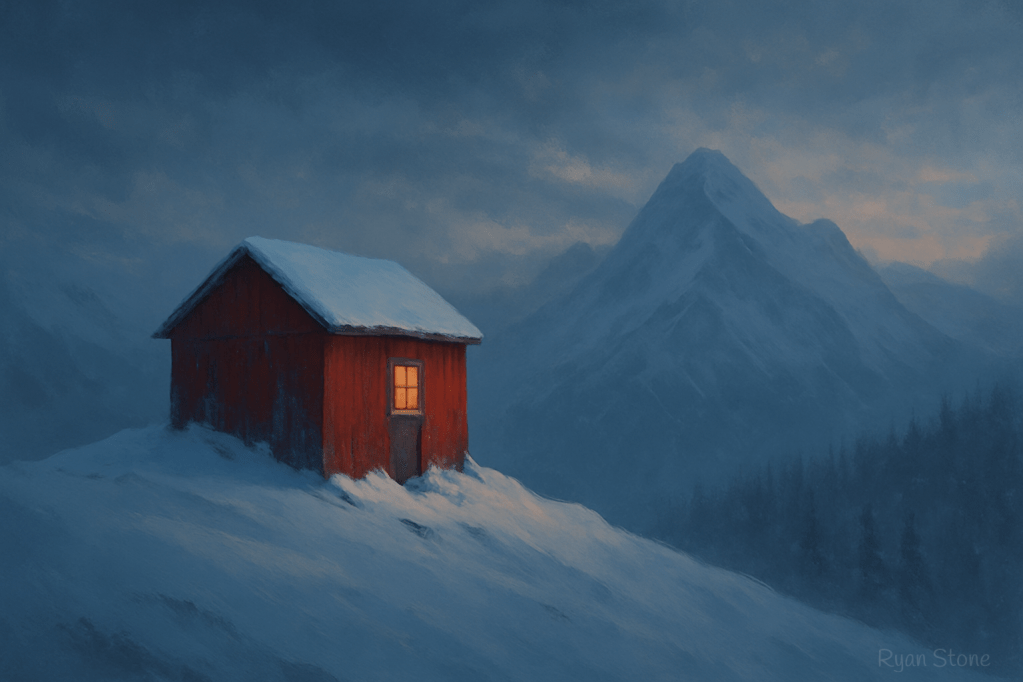
We climbed past where the trees give up, boots sinking through hush and drift, wind at our backs like a warning we chose not to hear. The red shack waited— tilted, rust-kissed, half-swallowed by snow.
Inside, a match struck light against the cold. One flame, then another, until the dark softened just enough to hold us.
There was one chair. Two blankets. The kind of quiet that lets you hear your own name in someone else’s breathing.
We didn’t talk about what waited below. Not your return flight, not the half-packed bag, not the years of almost. You laughed at the frost collecting in your lashes. I didn’t say how long I’d been watching that storm coming.
Your knee brushed mine beneath the blanket. You didn’t move. Neither did I. The silence turned warm around us.
Outside, snow piled up against the door— a kind of mercy. Inside, your hand rested near enough that I could’ve reached it without asking.
And didn’t.
You slept. Or pretended to. And I watched the window turn from black to the soft grey of not yet morning.
Later, we climbed down without speaking of it. The wind had died, but something else was already drifting.
Now, sometimes, when I smell woodsmoke or hear the hush of snow against tin, I think of that night.
Not with regret. Not exactly. Just the ache of something so nearly true, it still breathes somewhere in the white.
⸻
II. What the Snow Didn’t Cover
(Her Voice — Then and Now)
We climbed higher than we should have, past the line where trees stop pretending to survive. You didn’t complain once— just kept pace, like you’d follow me anywhere. Maybe that was part of the problem.
The red shack was smaller than I remembered from the map. Leaned east, like it had been bracing against wind for decades.
Inside, your hands shook lighting the match. Not from cold. I said nothing. You handed me the flame like a question.
There was one chair. Two blankets. No space for lies.
I pulled the blanket over both of us. You didn’t move away. The silence felt like something we’d been circling for years.
We didn’t speak of the train waiting in the valley, or the person I said I’d marry. Not of the night you left my flat before I woke, not of the letter I never wrote.
Your shoulder touched mine. Just that. But it lingered.
I didn’t sleep. Faked it because I couldn’t bear the weight of your eyes on my back, not if they were saying what I think they were.
In the morning, you brewed coffee so quietly it hurt.
I thanked you. Too softly, but you heard.
And we walked down like the snow hadn’t buried something between us.
Even now, when winter presses its fingers against my windows, I go quiet. I remember the warmth we almost let happen, the way you never reached for me— and how I never asked you to.
And I wonder if love is just the sum of all the silences we never dared to break.
⸻
III. All That the Snow Kept
(His Voice — Years Later)
You never looked back— not once— as we left the shack behind. But I remember how your hand brushed mine that night, how you didn’t pull away.
And how I didn’t take it.
We both left something in that red-walled hush. Not a kiss, not a promise— just the warmth that might have followed.
You were always better at staying silent. I was always better at pretending not to notice what silence could mean.
There was a moment— when you shifted in the dark and the blanket slipped just enough— I saw the skin of your back, pale in the lantern glow, and I thought if I speak now, if I say it— but I didn’t.
You were leaving. And I was too late.
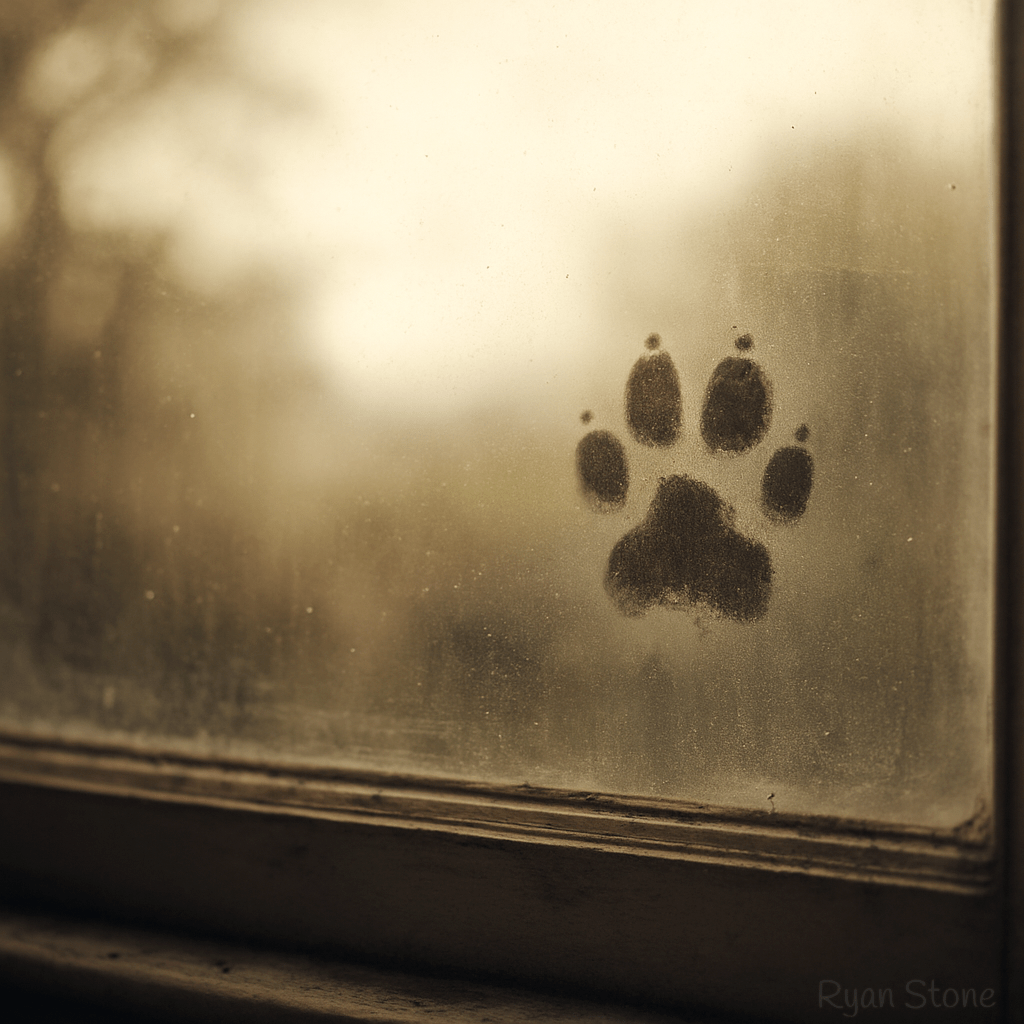
Now, sometimes, I find frost on my window and think of your breath fogging the glass above the sink. The way we made coffee like it was something sacred. The way we left without needing to say we’d come closer than we ever would again.
I don’t regret not touching you.
But I do miss the man I might’ve become if I had.
And I hope— in some quiet room of your life— you still carry a small warmth from that night.
I pulled my dog through summers, tongue lolling in the heat, ears twitching at bees and things only he could hear.
The wagon rattled like laughter over cracked footpaths, and I—captain of that small red ship— knew no world beyond the corner store and the shade beneath our tree.
It was enough.
Now I carry more— keys, deadlines, debt, the ache of wanting what I used to have before I learned to want.
My wagon rusts in a shed somewhere, still red beneath the dust, still waiting for a child who doesn’t need more.
Friends, a quiet note to say my first poetry collection is now out in the world. The Weight of Lost Things gathers the red-dust roads, dogs, and crows that have followed me for years and sets them loose on the page.
If you’d like to read along, you can find the book here:
Set against the dry pulse of the Australian outback, these poems chart the fractured terrain of boyhood, brutality, young love, and the loyalty of dogs. Fathers vanish, mothers soften, dogs die, and the land never forgives. With language as lean as the paddocks it describes, this book explores what gets buried, what remains unspoken, and the quiet ache of staying when there’s nowhere left to go.
we were sixteen, all collarbones and restless hands, kicking gravel behind the bike sheds like we knew the world owed us something and we weren’t afraid to ask for it.
your name lived in my throat for years after like a word I never learned to say out loud.
we never got a proper ending— just a Tuesday and a late note and a sudden silence.
I still remember the smell of your school shirt— faint perfume, pencil shavings, a crushed eucalyptus leaf you kept in your pocket for luck. (you said your Nonna told you it kept snakes away. I said I didn’t believe in that. I lied.)
I’ve loved since. proper loves. wild, bruising, grown-up ones. but none that remembered the way I drew hearts in the margins of science notes and spelled your name wrong just to be careful.
you were the ache before I had words for aching. the door left slightly ajar in every room I ever left.
I saw someone who looked like you last week— older, tired, still a little wild in the jaw. my chest folded in on itself like a paper crane.
I didn’t stop. I didn’t speak. some memories aren’t meant to be put back into real time.
but still— on certain dusks, when the light’s low and the wind comes in smelling like warm bitumen and chalk— I think of you.
Birds don’t stop in this town.
I see them fly past, black peppering
blue, going someplace. I’ve given up
dreaming wings. This town
will know my bones. Condoms
sell well in Joe’s corner store – boredom breeds
but breeding’s a trap, a twitch in the smile
of those steel-eyed shrews
who linger late after church.
I walked half a day, out past the salt flats,
after they closed the movie house down. Smoked
the joint she’d brought back from college
when she returned to bury my dad.
I remember how pale her fingers lay
across my father’s hands –
coal miner’s hands, tarred like his lungs;
like this town.




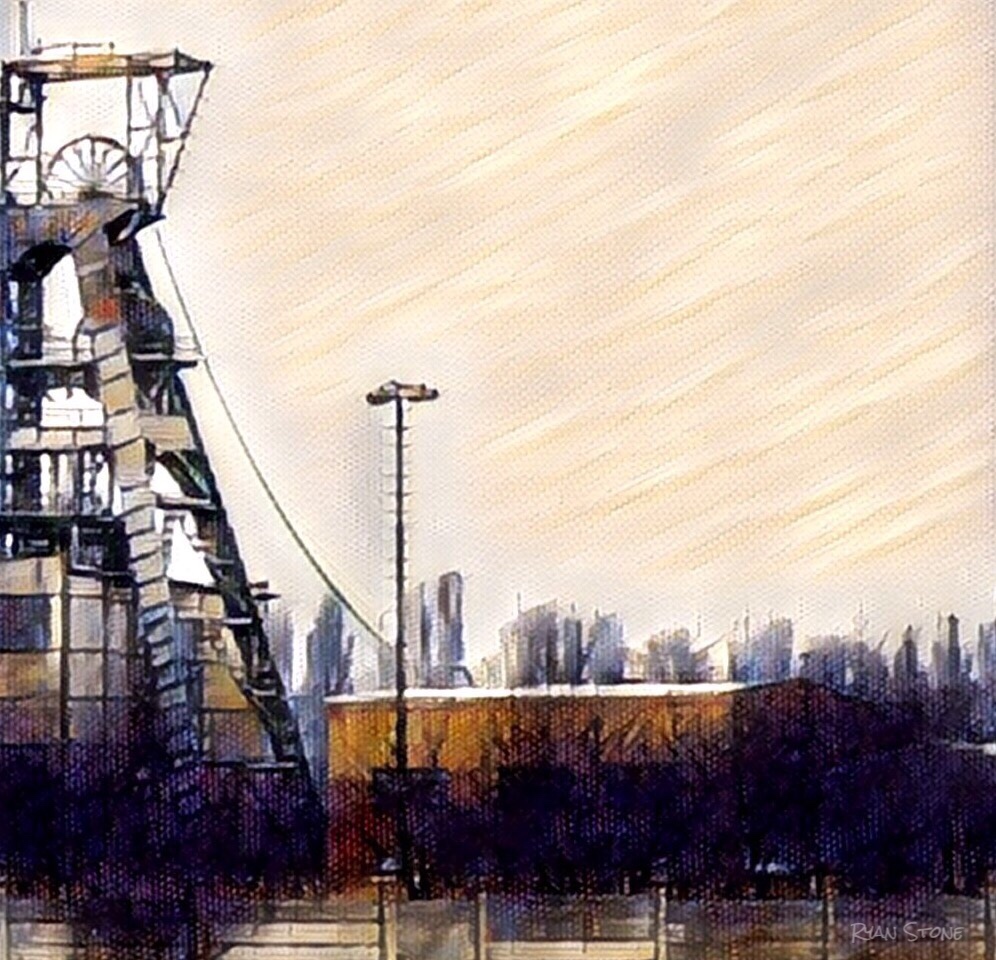

 days of stone