too much coffee, too little sleep, a love of words…
Author: Ryan Stone
Ryan Stone writes after midnight. His short fiction and poetry have appeared in publications including Eunoia Review, The Drabble, Algebra of Owls and Silver Birch Press and won prizes in a number of competitions at venues including Grindstone, Writer Advice, Goodreads, Writers’ Forum Magazine and Poetry Nook. He lives in Melbourne, Australia.
Not the loudest, not the first to arrive or last to leave. You are the steady warmth between seasons, the breath that doesn’t need to be noticed to keep the body whole.
You are the chair pulled close, the cup filled without asking, the hand that doesn’t flinch.
It’s a quiet thing, a word found in the stillness of dawn while dreamers slumber and the new moon succumbs to day. A fading thought, soft intake of breath in the long pause
between sleep and wake. Sometimes it’s hope enduring wildfire, flood, or the dusts of time. Maybe dinosaur bones, a lost tomb, or scarecrows guarding lavender fields.
Perhaps a dew-drizzled cobweb, a jonquil, cloud or song. Most often it’s your breath, soft and steady, promising one more day in which I will belong.
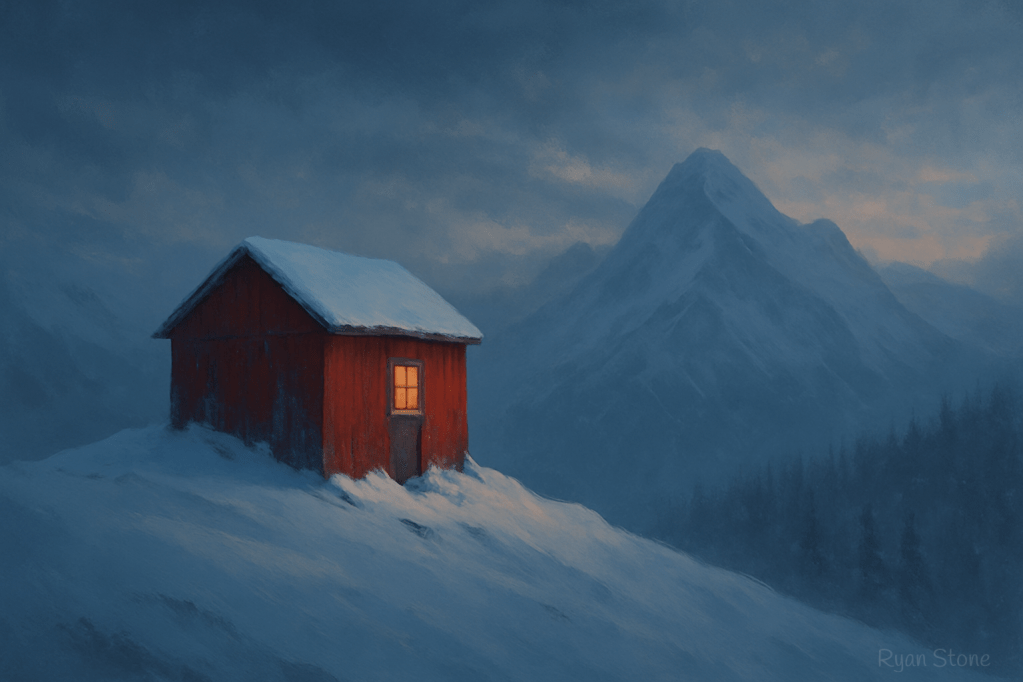
We climbed past where the trees give up, boots sinking through hush and drift, wind at our backs like a warning we chose not to hear. The red shack waited— tilted, rust-kissed, half-swallowed by snow.
Inside, a match struck light against the cold. One flame, then another, until the dark softened just enough to hold us.
There was one chair. Two blankets. The kind of quiet that lets you hear your own name in someone else’s breathing.
We didn’t talk about what waited below. Not your return flight, not the half-packed bag, not the years of almost. You laughed at the frost collecting in your lashes. I didn’t say how long I’d been watching that storm coming.
Your knee brushed mine beneath the blanket. You didn’t move. Neither did I. The silence turned warm around us.
Outside, snow piled up against the door— a kind of mercy. Inside, your hand rested near enough that I could’ve reached it without asking.
And didn’t.
You slept. Or pretended to. And I watched the window turn from black to the soft grey of not yet morning.
Later, we climbed down without speaking of it. The wind had died, but something else was already drifting.
Now, sometimes, when I smell woodsmoke or hear the hush of snow against tin, I think of that night.
Not with regret. Not exactly. Just the ache of something so nearly true, it still breathes somewhere in the white.
⸻
II. What the Snow Didn’t Cover
(Her Voice — Then and Now)
We climbed higher than we should have, past the line where trees stop pretending to survive. You didn’t complain once— just kept pace, like you’d follow me anywhere. Maybe that was part of the problem.
The red shack was smaller than I remembered from the map. Leaned east, like it had been bracing against wind for decades.
Inside, your hands shook lighting the match. Not from cold. I said nothing. You handed me the flame like a question.
There was one chair. Two blankets. No space for lies.
I pulled the blanket over both of us. You didn’t move away. The silence felt like something we’d been circling for years.
We didn’t speak of the train waiting in the valley, or the person I said I’d marry. Not of the night you left my flat before I woke, not of the letter I never wrote.
Your shoulder touched mine. Just that. But it lingered.
I didn’t sleep. Faked it because I couldn’t bear the weight of your eyes on my back, not if they were saying what I think they were.
In the morning, you brewed coffee so quietly it hurt.
I thanked you. Too softly, but you heard.
And we walked down like the snow hadn’t buried something between us.
Even now, when winter presses its fingers against my windows, I go quiet. I remember the warmth we almost let happen, the way you never reached for me— and how I never asked you to.
And I wonder if love is just the sum of all the silences we never dared to break.
⸻
III. All That the Snow Kept
(His Voice — Years Later)
You never looked back— not once— as we left the shack behind. But I remember how your hand brushed mine that night, how you didn’t pull away.
And how I didn’t take it.
We both left something in that red-walled hush. Not a kiss, not a promise— just the warmth that might have followed.
You were always better at staying silent. I was always better at pretending not to notice what silence could mean.
There was a moment— when you shifted in the dark and the blanket slipped just enough— I saw the skin of your back, pale in the lantern glow, and I thought if I speak now, if I say it— but I didn’t.
You were leaving. And I was too late.
Now, sometimes, I find frost on my window and think of your breath fogging the glass above the sink. The way we made coffee like it was something sacred. The way we left without needing to say we’d come closer than we ever would again.
I don’t regret not touching you.
But I do miss the man I might’ve become if I had.
And I hope— in some quiet room of your life— you still carry a small warmth from that night.
Do you know how it feels
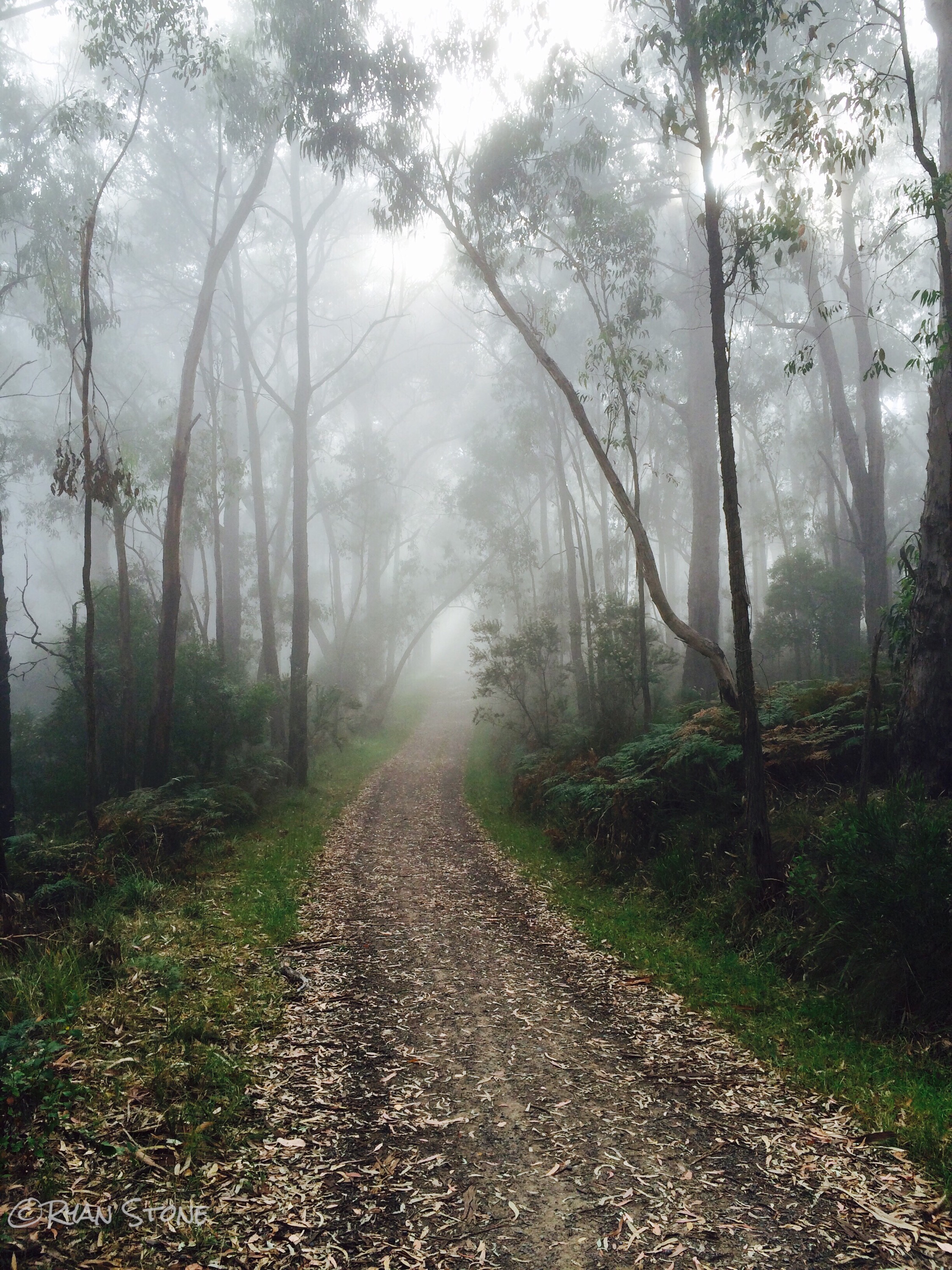
to stand alone in a forest
in the caesura
of a gathering storm?
With a graceful pirouette
the north wind about-faces
and just as quickly
a sou’ wester replaces
the breathy, dry kisses
of long afternoons in the sun.
Drawing breath from your lungs
and heat from your soles,
lowercase twisters
scatter leaves with abandon.
There’s a pause,
it is electric,
then thunder above.
A first splash, the herald,
caresses your skin
and whispers of days
when you sucked the air in
and laughed until laughter ran dry;
when you danced and you sang
and timeless, you lay
entwined ‘neath an indigo sky.
In that place, alone,
your lenses will fail
and your notebook fall
by the by.
Your shutter can’t capture
the depths of magenta;
your pen,
the dreaming Magpie.
It’s a moment,
just a moment,
before the storm breaks
and the old song
resumes its same rhyme.
Do you feel it?
Can you grab it?
A resolution, of sorts:
to wring from
each minute
a lifetime.
You will never fall in love with me.
Don’t try to convince me
That I will always wait for you.
If you really look, you’ll see
I’m not here for the long haul
Don’t imagine
You give me reason to stay.
When things get hard I’ll leave –
Don’t imagine
I’m not like the others,
Goodbye.
I’ll never say
I love you.
If I could write the best poem ever written, it wouldn’t be carved in stone or read aloud to thunder.
It would be quiet— just your name folded into a line only you would notice.
It would know how your hands shook the day you held someone who didn’t stay, how you once cried into the collar of your coat so no one would see.
It would smell like old paper, taste like mint on your wrist, feel like a dog pressing its weight into the silence of your knees.
The best poem wouldn’t try to be perfect. It would listen. It would wait. It would find you just before sleep, when the light is soft and your defences are down, and say:






 days of stone